

Taxpayers spend $60 million to make up for environmental damage at Scout site
the state
The Scout Motors manufacturing plant in Blythewood, South Carolina is under construction. The much coveted car factory will bring 4,000 jobs, but property needed for the plant has been stripped bare of trees and has suffered from erosion problems as wetlands and streams were filled. (photo taken Thursday, April 10, 2025.) Joshua Boucher jboucher@thestate.com
But the costs to the public could rise higher, as a result of the effort to compensate for wetlands and streams smothered by the work at Scout.
After a disagreement over how much land needed to be protected and how much restoration work was needed to offset Scout’s environmental impact, the Commerce Department beefed up a mitigation package as it raced to get a much-needed wetlands permit for the electric vehicle project, according to records reviewed by The State newspaper.
The more robust mitigation package, which involves fixing degraded creeks in a national forest, has added at least $18 million to the state’s mitigation costs, the newspaper found.
Expected costs of the entire creek restoration effort, however, have not been released and are expected to rise by millions of dollars, those familiar with the project said.
The creek restoration costs are in addition to $41 million the Commerce Department said it is spending on other pieces of the package to offset wetlands and stream losses from the Scout project in Blythewood, according to emails from the department.
That includes $27 million to purchase 5,000 acres in lower Richland County and more than $800,000 for an island in Fairfield County. In both cases, the land was bought for two to three times the value of the property listed in the Richland and Fairfield county assessor’s office records.
Overall, the nearly $60 million for wetlands mitigation exceeds the amount spent to compensate for wetlands losses at sites cleared for other high profile industrial development projects in the past 15 years.
Those include the Volvo automobile manufacturing plant in Berkeley County and the Boeing aircraft manufacturing plant expansion in Charleston County. Mitigation costs for each of those projects were under $20 million, according to public records, information from environmental groups and news accounts.
“The Scout mitigation effort is the largest mitigation effort S.C. Commerce has taken part in to date,’’ the department said in an email.
Another major mitigation package – which was not paid for by taxpayers – involved the Haile Gold Mine, a huge operation that has stripped the landscape in Lancaster County.
Offsetting the wetland and stream losses at Haile cost $27 million. But unlike Scout, the wetlands mitigation costs for the gold mine were paid by the mine’s owner, according to OceanaGold, which is digging up billions of dollars worth of the precious metal near the town of Kershaw. (OceanaGold separately agreed to pay cleanup costs for other environmental damage at the site.)
Boeing also paid for its mitigation costs, the company said.
The nearly $60 million known to have been committed to pay wetlands mitigation has again brought attention to South Carolina’s financial stake in the Scout project.
Legislators agreed in 2023 on a $1.3 billion financial package for Scout that includes money for multiple expenses, including compensation for wetlands and stream damage caused by clearing land at the project site.
The General Assembly overwhelmingly approved the package because Scout promises to create 4,000 jobs and invest billions of dollars in South Carolina. But a handful of lawmakers questioned whether the state had spent too much when the Legislature approved the $1.3 billion for Scout.
Now, records reviewed by The State newspaper detail the amount South Carolina is spending on the wetlands and stream mitigation part of the Scout financial package.
Information about the Scout mitigation costs comes from public documents and emails from the S.C. Department of Commerce, the U.S. Forest Service and the S.C. Department of Natural Resources, as well as interviews with sources familiar with the mitigation package. The State newspaper reviewed thousands of pages of documents obtained from government agencies under South Carolina’s open records law.
Scout supporter Dick Harpootlian, a former Democratic state senator, said he would like to have known about the wetlands mitigation costs at the time the Legislature discussed the project.
“If I would have known it was $60 million or more dollars for mitigation, I probably would have wanted to talk about that,’’ the Columbia lawyer said, noting that the mitigation cost “is not an insignificant expenditure.’’
Harpootlian urged legislators to look into the matter, possibly through a Legislative Audit Council review of the mitigation.
“This isn’t Scout’s fault,’’ he said. “This is the failure of somebody, whether it is at the Department of Commerce, or whether it’s some other state agency or entity.’’
In addition to mitigation costs, the $1.3 billion taxpayer-funded incentives package includes money for bridge and rail spur construction and water and sewer improvements.
State Rep. Bruce Bannister, who chairs the House Ways and Means Committee, said he’d rather not spend money on incentives, or on wetlands mitigation, but that was the price tag for bringing Scout to South Carolina.
“The economic returns we will get over the life of the Scout project are well worth it,’’ the Greenville Republican said, likening the Scout decision to German automaker BMW’s decision to locate in South Carolina more than 30 years ago.
Bannister indicated that the Commerce Department was under pressure to bring in Scout as it competed with other states, meaning it needed to get the mitigation dispute resolved so it could move on.
When the U.S. Environmental Protection Agency and the state Department of Natural Resources pushed to add the national forest stream work to the original mitigation package, the state had little choice but to comply, he said. (The agencies in 2023 had also expressed concern at how quickly the Scout project site was being cleared.)
“At the end of the day, you were just kind of at the mercy of the EPA,’’ Bannister said. “We don’t need to scuttle the deal arguing over $10 million or $15 million in additional mitigation.’’
“We could challenge, but then still had to pay’’ the extra mitigation costs, he continued.
How successful the Scout project ultimately is will determine whether the expenditure was worthwhile, said Don Weaver, a Richland County councilman known for years as an outspoken taxpayer advocate.
The cost “is a little high, but I’m glad the project (is) in South Carolina,’’ instead of Georgia or North Carolina, Weaver said. “Sometimes you have to spend money to make money, and clearly that’s what we’re doing with the Scout plant.’’
Despite the expense, many agree that saving land and restoring the environment in other areas to compensate for the environmental damage at Scout is a good thing.
The property protected in Lower Richland is an example of how that benefits the public and the environment, according to one official with the Open Space Institute, a national non-profit group that protects land.
“South Carolina is getting thousands of acres that become open to the public,’’ said the institute’s Nate Berry, who helped negotiate the purchase of the property in Richland County.
The property in Richland County is near Congaree National Park and is home to lush stretches of a major creek that drains toward the federal preserve.
Among the features are land long-used by the Millaree Hunt Club, a prestigious private sportsmen’s retreat well known for its scenery and clean water. The creek at Millaree is enveloped by a canopy of hardwood trees.
Work to restore degraded streams and wetlands on other parts of the land is planned before it becomes a publicly accessible preserve. The state Forestry Commission will eventually become the owner and manager of the 5,000 acres.
Those who worked on acquiring the land say trees and wetlands on the part of the property that is being restored will one day rival those of nearby Congaree National Park.
Scout issued a statement saying it appreciates the efforts of officials at the state and county levels for supporting construction of a plant that will “strengthen the Midlands economy.’’ The mitigation package will preserve “thousands of acres of natural land and streams’’ in Richland County and the Sumter National Forest, Scout’s statement said.

Economic prosperity and environmental damage
Landing Scout has been touted as one of the biggest economic development successes in state history, rivaling BMW’s arrival in the early 1990s under then-Gov. Carroll Campbell.
A division of Volkswagen, Scout plans to make SUVs and trucks at an expansive manufacturing plant off Interstate 77 at Blythewood. The company has said it would produce as many as 4,000 jobs. Its investment in South Carolina is around $2 billion.
Republican Gov. Henry McMaster has been an enthusiastic supporter, even as President Donald Trump has led efforts to roll back federal support for the electric vehicle industry. Trump’s policies, including scaling back tax cuts for electric vehicles, are forecast to slow growth of the industry. Undeterred, Scout has moved ahead with its South Carolina plant.
Environmentalists have supported manufacturing electric vehicles in South Carolina because the automobiles don’t release pollution that worsens air quality and contributes to climate change.
But work at Scout has had a massive impact on the more than 1,000 acres being developed near Blythewood. The property has been scraped clean of trees and vegetation, creeks have been filled in and wetlands have been destroyed to make room for the manufacturing facilities.
All told, Scout’s work is affecting more than 70 acres of wetlands, 38 acres of ponds and about seven miles of streams, most notably Beasley Creek in Columbia’s Broad River watershed.
As a result of the expected impacts, state and local officials had to come up with a mitigation plan to offset those losses. That’s a requirement to obtain a federal wetlands permit, which a company needs so it can work on sites studded with bogs and swamps.
Those working on the Scout site have had trouble containing sediment and mud, causing creeks off of the industrial property to turn brown with silt.
The S.C. Department of Environmental Services fined Richland County, the Scout project site’s owner, $1 million earlier this year for violating laws to control storm water. The county could pay as much as $3 million if it doesn’t resolve certain problems in coming months.
Still, the environmental violations are a separate cost from the mitigation expenses at the site. The mitigation costs are the result of a plan developed to offset the wetlands and stream losses that project supporters knew were in the project’s path.
Specifically, the mitigation costs to offset the environmental impacts at Scout break down like this:
- $27 million for 5,000 acres in lower Richland County adjacent to Congaree National Park. The undeveloped property, composed of two parcels, was collectively valued by the county assessor’s office at $7 million before the sale.
- $825,000 for Shelton Island in the Broad River between Fairfield and Union counties. The undeveloped, forested island, which is about 150 acres, was valued at $378,800 by the Fairfield assessor’s office before the sale.
- $11.7 million to Water and Land Solutions, a company that provided a variety of services, including development of the mitigation plan in Richland and Fairfield counties. The payment includes preparation of the Richland County land to become a future state forest. Those duties include restoring streams to natural conditions and planting hardwood trees.
- $1.4 million to the Open Space Institute, a national non-profit organization. The payment is for the institute’s role in helping find land and to negotiate a sale for the Richland and Fairfield properties.
- $11.6 million for the stream restoration project that will occur on the federally protected Sumter National Forest in Chester County. The first of four streams being restored in Chester County is costing $2.2 million for construction. Commerce would not say how much three other streams would cost to restore. But assuming they are the same as the first stream, the expense would increase from $11.6 million to $18.2 million.
Additionally, some of the wetlands offset requirements were met through a mitigation bank in Richland County, although details of that were not available.
Expensive stream restoration plan
Bob Perry, a senior permitting strategist with Water and Land Solutions, said his company worked with the Open Space Institute to find the Richland and Fairfield properties to offset Scout’s impacts in Blythewood.
Those lands were enough to meet federal requirements to obtain the wetlands permit Scout needed for the project, he said. But he said the cost of the project has been driven up by demands from the state DNR and the U.S. EPA to add the national forest stream restoration project to the Scout mitigation package.
Money that Commerce said it committed to pay for the national forest work is only part of what that effort may ultimately cost, Perry predicted.
While The State newspaper has been able to find $18 million in costs expected for the stream project, one Forest Service report from 2014 indicates the cost could be $24 million.
The U.S. Forest Service did not provide a breakdown of the $24 million when asked by The State. The Commerce Department also has refused to provide the full projected costs of the national forest stream work.
Companies involved in the Scout mitigation effort could have found other land to protect, instead of spending millions of dollars restoring streams on already preserved land owned by the federal government, critics say.
“All they had to do was say ‘We want a substantial stream mitigation project in the lower Broad River watershed,’ ’’ Perry said. “I guarantee you, within 30 days, (the Open Space Institute) could have had property under option and we could have had a conceptual mitigation plan written that could have fit right into the permit application.
“And millions of taxpayer dollars would have been saved.’’
A criticism of the national forest work is that it will be a difficult project to complete because the effort involves restoring creeks that have stood as they are for nearly 100 years. The streams and surrounding land eroded in the early to mid-1900s as a result of cotton farming.
But vegetation and forests have grown up around the streams and they blend in with the woodlands today. Getting into heavily forested areas with heavy equipment and smoothing out the landscape will take effort, Perry said.

Critics also question why South Carolina taxpayers are spending money on an environmental restoration project that they say should be a federal taxpayer responsibility.
In fact, the U.S. Forest Service in 2014 entertained the idea of the stream project as part of a wetlands offset package for a proposed nuclear plant south of Charlotte. The plant was never built and the stream project was not done, records show.
Records show that the DNR and EPA pushed for additional Scout mitigation because they said the original package, put together by Water and Land Solutions and others, was not adequate to meet federal standards.
The plan for Scout, as initially proposed, would “barely meet’’ the amount of mitigation needed in “the best-case scenario,’’ according to a July 21, 2023, letter from the S.C. Department of Natural Resources to the U.S. Army Corps of Engineers, which considers permits to fill wetlands.
The type of mitigation proposed by the Commerce Department and Richland County – known as permittee responsible – was riskier than other types of mitigation that could be used, meaning more work was necessary in case something went wrong, the DNR said.
The EPA offered similar comments, saying “It is unclear if the compensatory mitigation plan will sufficiently’’ take care of the federal requirements.
Perry disputed that, saying the mitigation plan put forth initially is a federally accepted way of offsetting wetlands and stream losses.
Some of the disagreement between Perry’s company and the EPA and DNR centered on whether additional wetlands and streams needed to be protected in South Carolina’s Piedmont region because part of the Scout project is in the Piedmont.
The other part of the Scout project is in the sand hills/coastal plain, and most of the wetlands and stream offset work was originally going to occur in that area with the purchase of the 5,000 acres near Congaree National Park.
Federal law favors protecting land or restoring wetlands and creeks in nearby watersheds similar to the ones where development projects are destroying wetlands and streams.
The Southern Environmental Law Center noted this in a June 29, 2023, letter to the federal government. The letter said there was a “disagreement’’ over how much of the Scout property is in the Piedmont, and therefore how much mitigation needed to be done in the Piedmont.
Ultimately, the Commerce Department consented to the extra work, despite the dispute, because it needed to move ahead, those familiar with the issue said.
Congaree Riverkeeper Bill Stangler said restoring degraded creeks in a national forest could control mud from eroding downstream to the Broad River, a source of drinking water for Columbia. The river eventually connects with the lower Saluda to form the Congaree near downtown Columbia.
“I found it interesting just how excited some of the agency folks were to see that project actually getting moving forward, because they’ve been talking about it for a while,’’ said Stangler, who was not involved in detailed discussions about the national forest stream work.

The Sumter National Forest work, in a section of the preserve roughly between Columbia and the Gaffney-Charlotte area, has been of interest to the service for years. The work will reconnect streams to old flood plains, reduce sedimentation and stabilize stream banks, while helping wildlife, the Forest Service said in Aug. 11 email to The State. All told, more than 18 miles of streams would be improved.
Scores of species of crayfish, mussels, fish, frogs and ducks will benefit from the work, Forest Service spokesman Greg Cunningham’s email said.
The company chosen to oversee the stream work is EcoSystem Planning and Restoration, which has offices in Texas, Maryland, Tennessee and North Carolina. The company, commonly referred to as EPR, has become experienced at environmental restoration projects since it was founded in 2012, according to its website. The company revived the 2014 plan to offset the impacts of the proposed nuclear plant in South Carolina.
Records show that the DNR recommended taking a second look at the 2014 proposal to restore streams in the Sumter National Forest.
Officials with EPR and the Department of Natural resources said the project will be a good one because it will help reduce the flow of silt.
“Restoration of these streams will benefit the aquatic ecosystems not only in the Sumter National Forest, but downstream into the Broad River,’’ the DNR said in a written statement.
Congaree land and Shelton Island
The sizable cost of offsetting Scout’s impacts at Blythewood isn’t confined to the national forest work, records show.
South Carolina’s decision to protect the Congaree and Shelton Island tracts involves properties not known to be in immediate danger of being turned into subdivisions or other types of development. Yet buying them cost more than the county-assessed fair market value of the land, records show.
Records in the Fairfield County Assessor’s Office show the state is paying $825,000 for the Shelton Island property that is part of the Scout mitigation package.
That’s more than twice the fair market value of the land before it was sold, records show.
Russ Brown, whose father acquired Shelton Island about 20 years ago for $200,000, said his family agreed to sell the property after being approached by the Open Space Institute, a representative of the state.
Brown and Co. Landbrokers had been advertising the island for sale before the deal was struck, according to a listing on the company’s web site.
Brown, listed as a contact for the sale of Shelton Island, said it’s difficult to compare county property records to the ultimate sales price. County records are often a baseline, founded on mass property appraisals, rather than a specific appraisal done for individual property that is to be purchased, say some real estate experts.
But Brown said the state is getting a good deal for what he described as an ecologically important island.
“This property was loaded with hardwoods, walnuts, lots of different varieties of oak trees; it had just a real variety of wildlife and vegetation out there,’’ Brown said.
Also, in contrast to what county assessor’s office records show, Shelton Island’s owners had studies done before the sale – and the value was in line with the actual purchase price, Brown said.
Despite those assurances, the Open Space Institute, which will own the property until it is turned over to the U.S. Forest Service, declined to release an appraisal showing the presale value of Shelton Island.
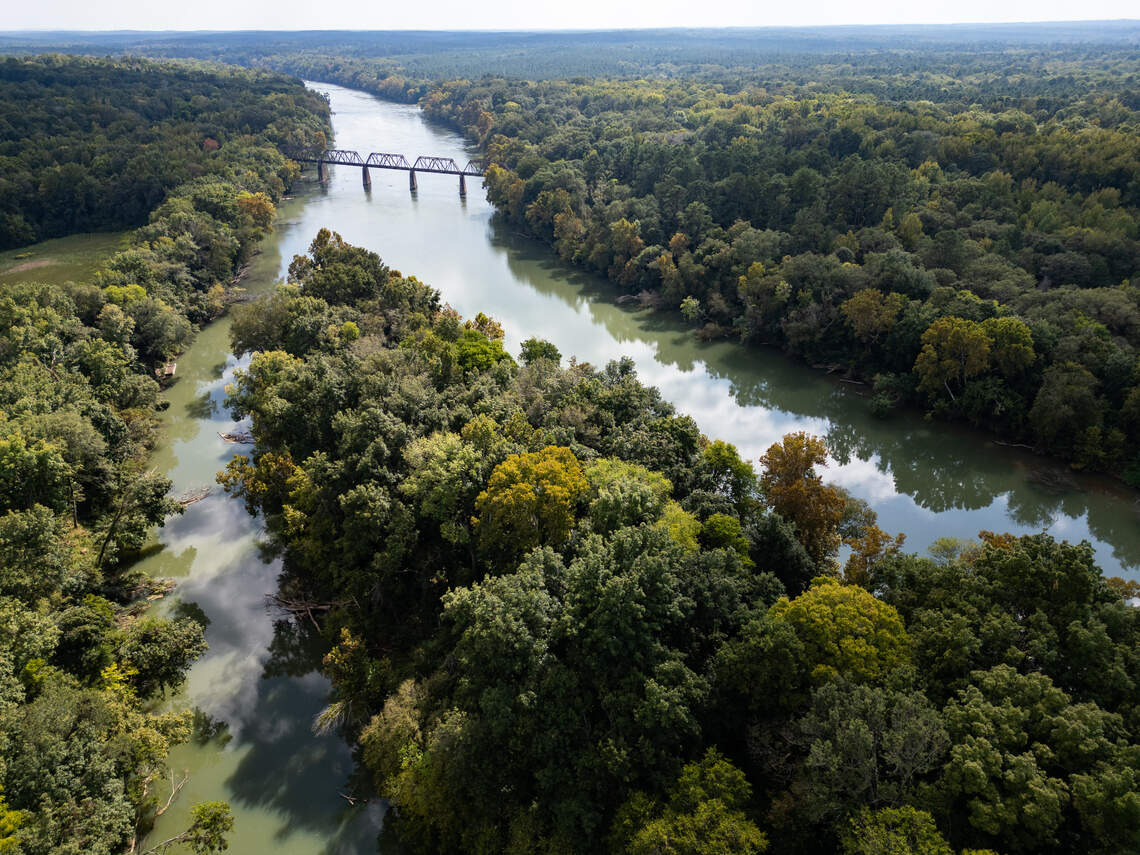
Questions at one point surfaced about the price being paid for Shelton Island because the U.S. Forest Service may eventually have bought the land anyway. The service had tried to acquire the island before the Scout mitigation effort surfaced, a spokesman said.
Pointing out the remote location of Shelton Island, the Southern Environmental Law Center also said threats of development “appear to be only vague possibilities, rather than an actual threat to the property,’’ according to a 2023 letter the organization sent the Army Corps of Engineers.
Shelton Island is a densely wooded land formation in the middle of the Broad River between Fairfield and Union counties. There is almost no development nearby and no bridge connects it to the mainland. The island is virtually surrounded by the Sumter National Forest.
In Richland County, the land being saved for conservation near Congaree National Park was owned formerly by members of the Boardman and Beidler families, wealthy Midwest residents with extensive landholdings in South Carolina.
Broken down, the 5,000 acres sold for the Scout mitigation in Richland County showed significant gaps between the county appraised value and the actual sales prices.
One tract, a 2,966 acre parcel, sold for $17.8 million in October 2023, or about $6,000 per acre. It was previously valued by the Richland County Assessor’s Office at $4.5 million, or about $1,517 per acre.
The other tract, a 1,912-acre property, sold for $9.3 million in October 2023, or about $4,900 per acre. It was previously valued at $2.5 million by the county, or about $1,307 per acre.
Efforts to reach representatives of the Boardmans and Beidlers for comment were unsuccessful. The Beidlers provided the original land for Congaree National Park in Richland County and for the Beidler Forest in Dorchester County.
Some real estate experts say it’s not unusual for county values to be lower than actual sales prices because the county provides basic values for tax purposes. So they say it isn’t fair to compare assessed values to actual sales prices. A parcel of land sells for what the buyer is willing to pay, they say.
Even so, the amount spent for the two rural Congaree tracts in Richland County – $4,900 and $6,000 per acre – also exceeded the per-acre-price of some other rural land the state has protected for conservation in recent years.
One recent property of comparable size to the two Richland tracts, Snow’s Island in eastern South Carolina’s Florence County, was acquired through state and federal money for about $2,780 per acre, according to the state Conservation Bank, which specializes in protecting land from development. Snow’s Island is more than 5,000 acres.
The state bought some smaller tracts in Georgetown County and Aiken County for under $3,700 per acre, bank records show.
Those comparisons are not absolute because the value of land and the sales price sometimes depend on where the property is located and what the demand is for the property. Some land acquired by the state for conservation – in development pressured areas of the mountains and the coast – cost the public $8,700 to nearly $13,000 per acre, respectively, bank records show.
Factors Richland County used in establishing values for the 5,000 acres near the Congaree River were its relatively remote location and its proximity to the Westinghouse nuclear fuel plant on Bluff Road, Richland County Assessor Fred Descy said in an interview with The State.
Descy said his office determined that “the land is not going to be developed for quite some time.’’
The nuclear fuel plant property has extensive groundwater contamination from decades of making atomic fuel rods and is the subject of state cleanup efforts, although no contamination is known to have escaped the fuel factory site. The fuel plant is on Bluff Road near the 5,000 acres the state is acquiring.
Mitigation can be expensive
The Open Space Institute’s Berry said it’s not easy negotiating a bargain basement price on land that is needed to compensate for the loss of wetlands and streams at an industrial site.
If landowners know their property is being sought to offset the impacts of a development project, it can drive up the price, he and others agreed.
Commerce said the Richland and Fairfield property owners were approached by representatives of the state about buying their property. Real estate websites show the Brown land company had been marketing Shelton Island for sale.
“None of the properties were being actively listed, but instead were sought out due to their location (in relation to the Corps mitigation service area maps) and their respective mitigation values and general desirability as mitigation sites,’’ Commerce spokeswoman Kelly Coakley said in an email.
The Commerce Department said 13 other chunks of land were considered for protection to offset the Scout impacts, but were ultimately rejected.
Those properties included land in the Crane Creek section of Richland County, an area near the Scout site that would have likely met the goal of mitigation sites being in the same watersheds as industrial sites that destroy wetlands and streams.
Stream and wetlands restoration work in the Crane Creek watershed also could have helped mollify concerns that minority communities downstream from the project site might be flooded with runoff.
The Southern Environmental Law Center’s 2023 letter to the Corps said protecting land in Crane Creek’s watershed “would provide benefits to downstream environmental justice communities.’’
But Commerce said only 309 acres were identified in the Crane Creek area as possible mitigation properties.
Other tracts of land considered by the state included Goose Pond, an 1,184-acre area in lower Richland County near Congaree National Park; Big Wateree Creek, a 6,111-acre area in Fairfield County; and the 2,139-acre Little River area of Fairfield County.
Commerce said none of them generated enough mitigation credit to offset the Scout losses. The mitigation land was chosen after talking with environmental agencies, the email said.
“The Congaree and Shelton Island properties were selected due to their locations and ability to satisfy (in large, block quantities) a significant portion of the mitigation credit needs for the project,’’ Coakley’s email said.
Perry said the owners of the Richland and Fairfield tracts knew the land would be suitable as mitigation for industrial projects and realized the land was being sought specifically to offset Scout’s wetlands and stream impacts. That drove up the price, he said.
“The Congaree and Shelton properties were valued based on the mitigation value … not merely as raw land purchases,’’ according to a statement from Commerce.
In the case of the 5,000 acres, the state “got a fair deal,’’ the Open Space Institute’s Berry said.
“Did we get a big bargain, according to our appraisal? No,’’ Berry said. “But I will tell you that we didn’t grossly overpay, or meaningfully overpay.’’

This story was originally published October 9, 2025 at 6:00 AM.